Preparing for a job interview can be one of the most important steps in securing your dream job. Whether you are a fresher entering the job market or an experienced professional looking for new opportunities, knowing how to prepare for job interviews can significantly improve your chances of success.
Join our social media platform
Job interviews are not only about answering questions but also about demonstrating your confidence, communication skills, and problem-solving abilities. Employers want to see whether you are the right fit for their company culture and whether you can contribute to their organization.
In this complete guide, you will learn:
- How to prepare for job interviews effectively
- Common interview questions and answers
- Tips to impress hiring managers
- Mistakes to avoid during interviews
- Strategies to increase your chances of getting hired
By following these steps, you will be able to approach any interview with confidence and professionalism.
Why Job Interview Preparation Is Important
Many candidates underestimate the importance of interview preparation. However, proper preparation can make a huge difference.
When you understand how to prepare for job interviews, you can:
- Answer questions confidently
- Showcase your strengths effectively
- Reduce interview anxiety
- Demonstrate professionalism
- Leave a strong impression on recruiters
Employers often prefer candidates who show preparation and enthusiasm rather than those who appear unprepared.
Read also: Resume Format for Freshers (2026): Best CV Format, Tips & Free Template
Step-by-Step Guide: How to Prepare for Job Interviews
1. Research the Company
The first step in learning how to prepare for job interviews is researching the company.
Before attending the interview, gather information about:
- Company history
- Mission and values
- Products or services
- Recent news and achievements
- Competitors
This helps you understand the organization and answer questions more effectively.
Example question you might face:
“Why do you want to work for our company?”
When you research properly, you can provide a strong and personalized answer.
2. Understand the Job Description
Carefully read the job description and identify:
- Required skills
- Key responsibilities
- Qualifications needed
- Preferred experience
When preparing for job interviews, align your skills and achievements with the job requirements.
For example, if the job requires teamwork skills, prepare examples of projects where you worked in a team.
3. Prepare Answers to Common Interview Questions
One of the best ways to prepare for job interviews is to practice answering common questions.
Here are some frequently asked interview questions.
Tell me about yourself
This is often the first question in interviews.
Structure your answer like this:
- Brief background
- Skills and experience
- Career goals
Example:
“I recently graduated with a degree in Computer Science and completed internships in software development. I enjoy solving technical problems and building applications that improve user experience. I’m excited about this role because it allows me to apply my programming skills while continuing to learn and grow.”
Why should we hire you?
Focus on your strengths.
Example:
“I believe my skills in data analysis and my ability to solve complex problems make me a strong candidate for this role. I’m also a quick learner and enjoy working in collaborative environments.”
What are your strengths and weaknesses?
Choose strengths relevant to the job.
Example strength:
“I am highly organized and able to manage multiple tasks efficiently.”
Example weakness:
“I sometimes focus too much on details, but I’ve learned to balance quality with efficiency.”
4. Practice Interview Questions
Practicing is a key part of learning how to prepare for job interviews.
You can practice by:
- Conducting mock interviews
- Practicing in front of a mirror
- Recording yourself
- Practicing with friends
This improves your confidence and communication skills.
Read also: Career Options After Graduation: 15 Best & Proven Paths for 2026
5. Prepare Questions for the Interviewer
At the end of most interviews, employers ask:
“Do you have any questions for us?”
Always prepare thoughtful questions such as:
- What does success look like in this role?
- What are the biggest challenges for this position?
- What opportunities for growth does the company offer?
This shows interest and professionalism.
6. Prepare Your Resume and Documents
Before attending the interview, bring the following documents:
- Updated resume
- Portfolio (if applicable)
- Certifications
- Identification documents
Ensure your resume matches the information you provide during the interview.
7. Dress Professionally
First impressions matter.
Choose professional attire based on the company culture.
Examples:
Corporate jobs:
Formal shirt, blazer, formal shoes
Startup jobs:
Business casual attire
Always ensure your clothes are clean and well-fitted.
8. Improve Communication Skills
Communication plays a huge role in interviews.
Good communication includes:
- Clear speaking
- Active listening
- Positive body language
- Maintaining eye contact
Practicing these skills can greatly improve your interview performance.
9. Work on Body Language
Body language communicates confidence.
Positive body language includes:
- Firm handshake
- Sitting straight
- Smiling naturally
- Maintaining eye contact
Avoid:
- Looking down
- Crossing arms
- Fidgeting
10. Prepare for Virtual Interviews
Many companies now conduct online interviews.
Tips for virtual interviews:
- Check internet connection
- Test camera and microphone
- Choose a quiet location
- Maintain eye contact with camera
Online interview preparation is just as important as in-person interviews.
Common Job Interview Mistakes to Avoid: How to prepare for job interviews
Understanding how to prepare for job interviews also means avoiding mistakes.
Lack of preparation
Always research the company and role.
Arriving late
Plan your travel and arrive early.
Speaking negatively about previous employers
Maintain professionalism.
Not asking questions
Employers appreciate curious candidates.
Overconfidence
Confidence is good, but humility is important.
Tips to Impress Interviewers
Follow these expert tips to stand out.
Show enthusiasm
Employers prefer candidates who are excited about the role.
Provide real examples
Use examples from:
- Projects
- Internships
- Academic work
Be honest
Avoid exaggerating skills or experience.
Follow up after the interview
Send a thank-you email to the interviewer.
Example:
“Thank you for the opportunity to interview for the position. I appreciate the chance to learn more about the role and your team.”
Interview Preparation for Freshers: How to prepare for job interviews
Fresh graduates often worry about interviews because they lack experience.
However, employers value:
- Skills
- Learning ability
- Attitude
- Communication
Freshers can highlight:
- Academic projects
- Internships
- Certifications
- Leadership roles in college
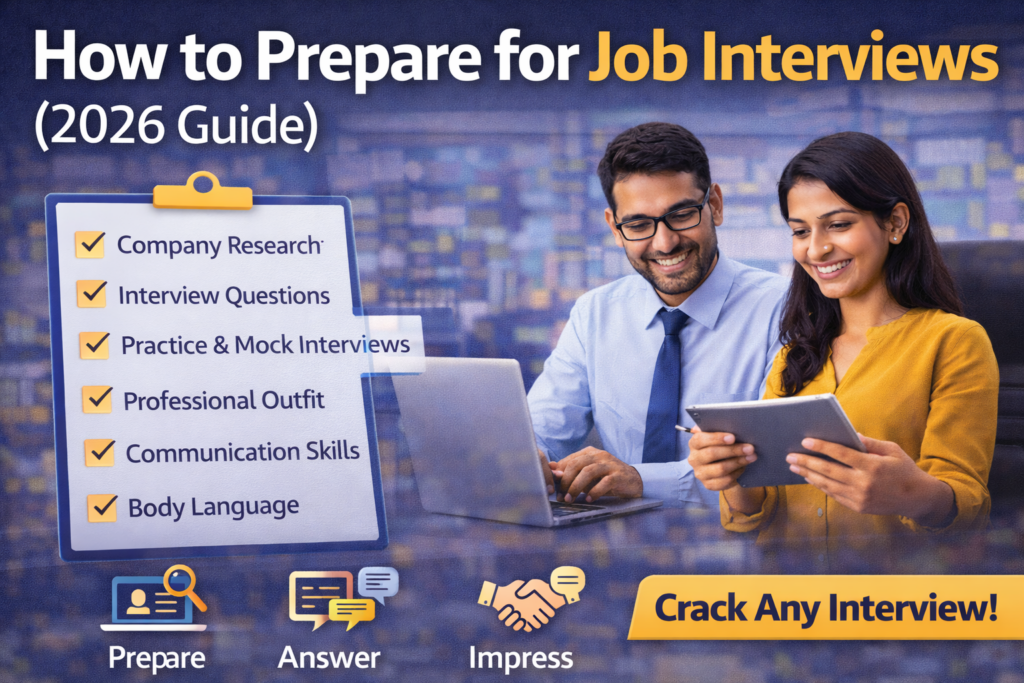
Interview Preparation Checklist
Use this checklist before your interview.
✔ Research the company
✔ Review job description
✔ Prepare interview answers
✔ Practice mock interviews
✔ Prepare questions for interviewer
✔ Print resume copies
✔ Choose professional outfit
✔ Plan travel or internet setup
This checklist ensures you are fully prepared.
Skills Employers Look for During Interviews
Recruiters evaluate several skills during interviews.
Important skills include:
- Communication skills
- Problem-solving ability
- Teamwork
- Adaptability
- Leadership potential
- Time management
When answering questions, demonstrate these qualities.
How to Reduce Interview Anxiety
Feeling nervous before interviews is normal.
Tips to reduce stress:
- Practice frequently
- Prepare answers in advance
- Arrive early
- Take deep breaths
- Stay positive
Confidence comes from preparation.
Final Thoughts
Learning how to prepare for job interviews is one of the most valuable career skills you can develop. Interviews are opportunities to showcase your knowledge, skills, and personality to potential employers.
By researching companies, practicing answers, improving communication skills, and presenting yourself professionally, you can significantly increase your chances of success.
Remember that every interview is also a learning experience. Even if you do not get selected, you gain valuable insights that help you perform better in future interviews.
With the right preparation and mindset, you can confidently face interviews and move one step closer to achieving your career goals.
Read More
- What to know before playing pokies at Online Casino Australia 2026: Essential tips
- Best Non GamStop Casino Sites revealed: explore fast and secure payout methods for UK
- Neosurf Casinos Australia revealed: How to maximize your gaming experience with quick deposits
- The ultimate review of PayID Pokies Australia: cashout options and gameplay insights
- Fast Withdrawal Casino features: discover top games for instant payouts